
Jodena Consulting Blog
Overcoming Front Desk Overload – Strategy #One to Increase Growth and Profitability in 2018
January 3, 2018
The front desk of a dental practice, as I like to say, could often be described as the busiest place on the planet. Answering the telephone, scheduling appointments, changing appointments, making financial arrangements, treatment plan coordination, insurance coordination, billing, collection calls, payroll, etc. The list of administrative responsibilities goes on and on and it is virtually endless. There are constant interruptions. There are always tasks to do with not enough hours in the work day to finish them. And that list is only for daily responsibilities. There is also a need to set aside blocks of time for specific projects like HR management, HIPAA and OSHA compliance, marketing initiatives, and website maintenance.
Yet while all of these tasks need to be accomplished, they must always be sublimated or set aside in order to consistently be able to offer an exquisite customer service experience, where every patient feels special and important and recognized. That is the constant dilemma – how can you organize your time to be able to accomplish your tasks but still give the feeling to every patient that they have your undivided attention?
There is no “one size fits all” solution. Depending on the size of the practice, the staffing requirements will be completely different. The challenges of the smaller office can often be even greater than the larger one. In my opinion, for every practice, there needs to be a conscious attempt to upgrade systems that will allow the front desk to operate more efficiently. These include but are not limited to on-line appointment scheduling, appointment confirmation, on-line payments, daily deposits from the comfort of your office, and electronic tablets to input patient data.
There are other behavioral changes that do not need new technology that can be a huge help to your administrative staff.
• Practice management software training at least once per year.
• Support from clinical staff – especially Hygiene – to schedule future appointments from the treatment room.
• The doctor understanding the work flow at the front and not requesting “stuff” to be done unless it is urgent or really important.
• Cross training for front desk personnel in order to mitigate the impact of vacations and sick days.
I hope that these suggestions will stimulate you to develop an action plan to retool the workings of your front desk. This is not an overnight fix. This will take time and creativity. Schedule a number of meetings with your staff this month. Listen to their input. Get consensus. And then start to create some momentum. Continuing to do what you’ve always done and expecting better results – I don’t think so! It’s a New Year – how about a New You.
This is the first of five posts on how successful dental practices can increase their growth and profitability in 2018. Next week’s topic – staying on time.
Important New Information About Google
December 20, 2017
 Starting in October 2017, Google Chrome will begin showing large red colored “NOT SECURE” warnings when users try to complete a form on a website that doesn’t have secure SSL encryption set up. SSL stands for Secure Sockets Layer. It is used for establishing a secure link between a browser (like Chrome) and a web server that hosts a website like jodena.com. SSL is an industry standard used by more and more websites these days to protect online transactions with visitors. The insecure designation will show up in some way for all browsers but at the moment will be most visible in Chrome.
An SSL certificate can be added to your website by your webmaster or hosting company that verifies authenticity of a website and shows up as a “locked” or secure site once installed. Secure sites have https in front of the domain rather than http – and the S is a big deal.
SSL is a ranking factor. Research now shows that https sites typically rank higher than their http counterparts. This means that if two websites are equally relevant in all other factors, the https or secure site will rank better in many cases. SSL also leads to increased trust with visitors to your site. Seeing that prominent NOT SECURE next to your website address is not a real confidence booster to patients visiting your site for the first time. And SSL is safer for your visitors as https protects user data and ensures that you are connecting to an authentic site and not a fake one.
My site is now secure. You can see the picture of the lock next to my url. And if you click on the url you can see that it is now https. A good certificate for a dental website is not expensive – probably shouldn’t cost you more than $10 per month.
One last point – and a very important one. There is a significant amount of work involved to make this changeover for sites that are optimized for search. You can’t simply add the SSL lock without suffering catastrophic failure of top search results. Http to https is like changing your domain. You must create a roadmap (.htaccess file) that tells search engines that everything that used to be http is now https. If you forget this step you will lose rank big time. So you need to hire a professional to do this for you. I would heartily endorse and recommend my friends at TNT Dental. You can give Tim Healy a call at 214-680-1270.
Year End Pressures
December 4, 2017
In the blink of an eye, the New Year will be here. December is usually a very very busy month. Patients trying to maximize their yearly insurance benefits makes for a hectic schedule. A good problem to have, but one that creates an inordinate amount of pressure on everyone. And the holidays in general, with shopping, and parties, and family gatherings and kids out of school, are quite stressful. Certainly not the best environment to be able to sit down and take the time to carefully plan for 2018 and develop strategies on how to improve the performance of your dental practice.
From my vantage point as a coach working with many successful dental practices seeking ways to become more successful, I get to see first hand on a daily basis the good and the bad, the elation and the frustration, what works well and what doesn’t. Here is a list of five common problems – in no particular order – that I repeatedly observe. Finding a fix will go a long way towards creating growth and increasing your profitability.
• Front desk overload.
• Inability to consistently stay on time.
• Inconsistent and/or schizophrenic Internal Marketing.
• Lack of leadership and poor communication with staff by the doctor.
• Not enough second visit treatment plan consultation appointments.
My plan is to write a weekly blog post – rather than my normal every other week – and attempt to address each of these five topics with as much detail as possible. Hopefully these posts and the suggestions they contain will be good source material for some January staff meetings.
So go ahead and enjoy this Holiday Season, but please be prepared to set aside the necessary time as 2018 unfolds to introduce some system changes in your office that will give you the maximum opportunity to make 2018 your best year ever.
A Thanksgiving Message
November 20, 2017
 Thanksgiving is far and away my best day of the year. Family, friends, great food and drink, and plenty of football. What could be better? The older I get, the more appreciative I am for all of my many blessings.
We, as most families have, for many years, continued a tradition of having everyone around the table articulate what they are most thankful for. It was always interesting to hear the comments, especially from the kids. “I am grateful for my family even though I sometimes fight with my sister”. “I am grateful that we can all be here today together to celebrate.” “I am grateful that I don’t have to go to school until Monday!”
How times have changed. Now we are grateful for:
• A month without a mass shooting.
• A week without an act of terrorism being perpetrated on innocent civilians.
• A day without political partisanship and the spewings of the extremists on both the left and the right.
• A day without another exposé of sexual harassment that is so demeaning.
• A day without the politicization of sports.
• A day when I can actually get back to being able to believe as truth what I read in the newspaper or see on TV.
Next Thursday my plan is to take a complete break from email and social media. I will turn off the computer and my iPhone. I will decompress and enjoy the day and the company.
America is still the greatest country on Earth. The eternal optimist in me believes that normalcy and respect and goodness to others will return. And for that we will happily give thanks.
The Wave
November 6, 2017
 This past Labor Day Weekend, my wife and I had the opportunity to travel to Iowa City to spend time with two of our grandchildren. Daniel is a junior and Samantha a freshman at the University of Iowa. One of the many highlights of our visit was to attend a Big Ten football game. 68,000 raucous and loyal Hawkeyes fans – standing room only – you truly had to be there to believe the scene!
Directly adjacent to the Stadium is the brand new University of Iowa Stead Family Children’s Hospital. High over the stadium on the hospital’s 12th floor – with a wraparound birds-eye view of the field – patients and families and caregivers gather to watch the game. But on this day, something special happened for the very first time. At the end of the first quarter, prompted by the public address announcer, the huge crowd rose as one, turned to look up at the kids, and for a long sustained moment, waved at them. It was electric, exciting, and so emotional to be there!
I had forgotten about that experience until I read this past Friday’s USA TODAY. There is a fabulous article about The Wave and how it has now become a weekly tradition at Kinnick Stadium. The article features the story of a young boy, born with a serious heart defect, who at the age of six, finally received a heart transplant. As of this date, he has been in the hospital for almost 300 days. His mom has not left his side the entire time, sleeping on a pullout cart in his room. His dad, who ironically is a football coach in a community one hour away, comes on weekends and when he can during the week. Do yourself a favor and read this article – it will bring tears to your eyes.
The United States in 2017 has had more than its fair share of tragedies: hurricanes in Texas, Florida, and Puerto Rico; wildfires in California; a mass shooting at a concert in Las Vegas; and a terrorist attack on a bike path in lower Manhattan. I thought it would be refreshing to finally focus for a moment on a beautiful story of courage and hope and the transformative healing effects of a crowd of people at a football game.
This Could Be You
October 23, 2017
 In my most recent blog post, I briefly discussed five insurance products that should be considered as an integral part of any natural disaster plan. Since that post was published, another natural disaster of overwhelming magnitude has occurred. The devastating fires in California have left a huge footprint of death and total destruction. It is painful to even try to imagine what it would be like to own a dental practice in that region. This unfortunate event reinforces once again the need to have adequate protection for your business.
Of course there has to be a balance between overhead management and risk management. These policies come with a substantial cost. In doing my research for these posts, I spoke to many insurance professionals and visited many websites. The more I delved into this topic, the more I realized its complexity. The state where you practice, the age of your office building, the type of construction, square footage, building and personal property values, and a host of other factors will influence the cost and the availability of coverage.
I came away with some absolutes. First, there is a significant dollar savings in purchasing combined coverages in packaged policies versus individual stand alone products. Second, working with insurance professionals who have specific expertise for dental practices is a must. I would feel comfortable recommending two excellent companies for your consideration.
Risk Strategies Company – Their health care practice is one of the largest in the country and gives you access to specialists with industry experience in large brokerages, consultancies, and insurance companies. They provide innovative and practical approaches to the full spectrum of liability and risk that your business faces. Contact: Diane Veltri at 401-272-1358.
Click Insurance – This is a client focused agency that specializes in insurance education and advocacy. From their headquarters in Watertown, MA they use modern technology to bring the local agent feel to clients all over the country. Contact: Matt Stawarz at 781-819-0066.
After the horse has left the barn it is too late to lock the door. It is part of human nature to delay and procrastinate. I urge you immediately to take the steps to create and/or re-examine your insurance protection.
Just Be Sure That Help Is There When You Need It
October 10, 2017
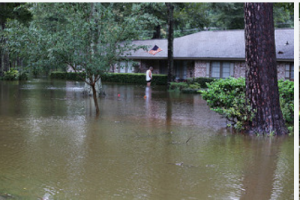 I sincerely hope that you personally were not adversely affected in the aftermath of hurricanes Harvey, Irma, and Marie. But if nothing else, by watching and reading about these weather events and the incredible devastation that they caused, I trust you have become super motivated to examine your own disaster coverage. Here is some information to help get you started.
1. Business Income or Business Interruption Insurance – This coverage provides cash relief as a result of any disaster that prevents your office from being open to see patients. After a minimum 24 hour waiting period, you will receive a daily dollar amount based on historical income and expense information that was provided at the time the policy was issued. The duration of the coverage is usually from one month to a maximum of six months. So based on the size of the practice, you could receive $1000, $5000, or $10,000/day – whatever is representative of past revenue. These plans always have a deductible, a specific dollar amount, and a fixed time period of coverage. The annual cost of the policy is priced accordingly.
2.Business Overhead Insurance – this is NOT natural disaster related, and should not be confused with such. This coverage provides income to cover fixed office overhead costs like staff, rent, loan payments, etc. in the event that the doctor is injured or sick and cannot practice. There are various waiting periods before coverage kicks in – and the policies are priced accordingly.
3. Business Personal Property Insurance – this coverage is for the costs to repair an office or office contents that are damaged by fire, wind, hurricane, and water damage from plumbing. Some policies have a small allowance for flood damage, but flood damage policies usually have to be purchased separately.
4. Flood Insurance – These policies are tricky. Flood as an insurance peril can complicate a business continuity plan. You have to be careful about the definition. We have all just witnessed the worst possible demonstration of why it is important to know and understand your flood risk and how your coverage operates following a disaster. Pricing is determined by where you live and how much you want in coverage.
5. “Civil Authority” Insurance – another kind of disaster coverage that is relatively new can be purchased as an adjunct to the business interruption insurance that I mentioned in item 1. This type of plan provides financial relief to you even if your physical space was not damaged but the surrounding community was. For example, in the recent Houston area incident, even if you were fortunate that your physical dental office was not damaged, there was so much flooding and power loss around you that patients could not travel to your office.
6. Although it is not an insurance product per se, you would be totally unprepared and out of touch with reality if you are not currently backing up computer data to an off-site server or to the Cloud.
In my next post, I plan to offer some concrete recommendations on how to go about purchasing the proper disaster insurance coverage.
There’s No Such Thing as Immunity From Disaster
September 22, 2017
Hurricane season has arrived in the United States with horrific and catastrophic consequences. As human beings, our hearts go out to the citizens of Texas who live in the greater Houston area and to so many millions of people living in the state of Florida. The effects of Harvey and Irma were devastating, with property damage in the hundreds of billions of dollars. As dentists, we sometimes think that our world is falling down around us when a patient cancels a two-hour crown and bridge visit at the last minute. Just imagine how you would feel if you were the owner of a dental practice in either of these geographic locations? We feel pity and empathy and sorrow for these communities, but we are almost embarrassingly guilty with the relief that it didn’t happen to us.
Which is the point I want to make. It could happen to you – and will you be properly insured? Recently I have been speaking with many insurance brokers and dentists. My sense from these conversations is that less than 35% of all dentists are adequately covered for a disaster. Over the next few weeks, I intend to share unbiased information about which risk products a dental practice should own, why they should own them, and what those costs are as a percentage of total overhead.
Don’t Be Afraid To Be Different
September 6, 2017
In my most recent blog about how to find and hire great employees, I mentioned that I had some ideas on how to make your job posts stand out from the competition. I received a number of requests for that information, so I’m happy to share those ideas with you now.
I have found a lot of success with what I call an “in your face” ad. It is a challenge and a shout out to talented professionals. Let’s say you are looking for a hygienist. The ad would say: busy general dental practice seeking the absolute best hygienist in the Providence area. If your clinical skills, team building skills, and communication skills are not excellent – please do not apply. This is a full-time position with benefits. Money is no object. Your pay will be commensurate with your experience and ability. All resumes will be kept in strictest confidence. Please email your resume to…..
It is unlikely that you are going to find an excellent talented candidate unemployed and sitting at home. That person probably is currently working in another practice but is no longer happy there. Otherwise she wouldn’t be looking at job posts! Perhaps when she started, things might have been different. Perhaps she no longer feels respected and valued. People that she enjoyed working with are no longer at the practice. She reads this ad and says “ I am the best hygienist in Providence” and I am going to apply.
The “in-your-face” mentality where you basically tell the average person NOT to apply is a challenge that the most talented employees will welcome. And these, of course, are the very people you want to speak with.
“Money is no object” gets attention. It is not false advertising because if you can in fact stimulate an amazing candidate to call – and you end up hiring that person – they will most likely be worth the cost.
Keeping job applications totally confidential is an important comfort factor to someone testing the marketplace. I recommend no calling of references until you know that this candidate is exactly the person to whom you want to offer the job.
Benefit packages often will make the “sell” for you. Sometimes benefits are more important to someone than the hourly wage. So mentioning that you offer benefits gets people to respond.
My other tried-and-true technique is helpful when you have two people of equal ability and skill sets, and you just can’t make up your mind. I would ask two questions. “Do you have siblings?” And “Did you ever play sports?” The reason for those questions is that you are trying to build a team in your office. An only child who did not have to interact with two or three brothers and sisters might be less able to understand how to compromise. And people who played sports by definition will understand teamwork better those who are not athletes.
I’d love your feedback. I hope these suggestions help.
Thoughts on Finding and Hiring Great Employees
August 21, 2017
 Attracting, building, and retaining a fabulous team is by far the biggest obstacle to the success of any business. In our current low unemployment environment, the task becomes even more difficult.
The first challenge is to locate and identify good candidates. Job sites and recruitment sites like Indeed, Craigslist, Monster, and zipRecruiter are popular. In my every day interactions with my consulting clients, I hear good and bad things about each of these companies and the results they deliver. I have recently been exposed to Glassdoor. This company has some novel ideas about connecting the right applicant to your job post based on allowing employers and current and former employees to describe what is special about your business.
The second challenge is what to write about the job position. How do you describe who and what you are looking for so that you don’t get flooded with unqualified resumes? I have come up with some ideas on how to make your job post stand out from the others. They are too numerous to list in this post. Just email me and I’ll be happy to share those thoughts.
Once you have done the hard work required to attract potential employees, the third challenge is to make the right hire. Hiring mistakes are SO costly and enervating and unfortunately happen too often. I recently watched a terrific video presentation by Randy Street. He is the co-author along with Geoff Smart of the #1 bestseller on Amazon called “Who:The A Method for Hiring.” The video is long – about one hour – but if you don’t want to buy and read the book, it would probably be well worth the investment of your time. Randy gets into a lot of the details of what works and what doesn’t work in the hiring process, and offers a step-by-step approach to greatly increase your chances of making good hiring decisions. Here’s a summary of his key points.
1. Creating a “scorecard” for each position. It is a step above the written job description because it also includes numerical components and cultural benchmarks that correlate with the mission statement of your business.
2. Asking the five key questions in the initial or screening interview. This interview can be on the telephone or in person. The suggested length of time is 45 minutes – 30 minutes asking about the applicant and 15 minutes talking about you.
3. Conducting what he calls the Top Grading Interview. This is the second interview and only for candidates that have absolutely thrilled you after their screening interview. “I want to hear more about your story.” Randy outlines a number of great questions and the reasons you need to ask them.
4. Following his recommendation that you check references AFTER the top grading interview based on the answers you receive to your questions.
5. Closing the deal. One last interview to SELL your practice. Explaining why it is such a great place to work based on the financial and lifestyle benefits
I believe there is some excellent and helpful information on this video that should significantly improve your rate of hiring success. And I am glad to see that it ties in with my own personal philosophy of hiring slowly, but firing quickly. Unfortunately, even with the best of preparation and following all of these suggested protocols, we sometimes make the wrong hiring decision. When that happens – and you realize you made a mistake – cut your losses – and go back to the drawing board.